
I worked at Marylebone Cricket Club, as Collections Officer in the Heritage & Collections Department, for over 13 years. During that time, I was involved in dozens of exhibitions, from single display cases and temporary major match displays to the annual, main gallery headline exhibition This is not one case study, but tips I’ve picked up over the years.
I really enjoy working on exhibitions, but to ensure they were installed on time, within budgets and with the least stress, it helps to break them down into a series of smaller tasks. These are a few of the things to consider to preserve your sanity.
1: THEME: What are you trying to say? Who is it aimed at? What events will it be linked to?
A main gallery update can take months of planning and involve external lenders, curators and contractors. Ensure you have a clear theme, as this makes everything from object selection to text label content easier to decide. Once theme and object selection had taken place we often worked with Blue| Museum Exhibition Designers, on case design and install. On a much smaller scale myself and the Archivist often set up temporary displays showcasing a particular type of object or new acquisitions. This one was for Alan Knotts’s cricket shoes, this type of revolving display keeps things fresh, and shows visitors that your collection is always evolving.
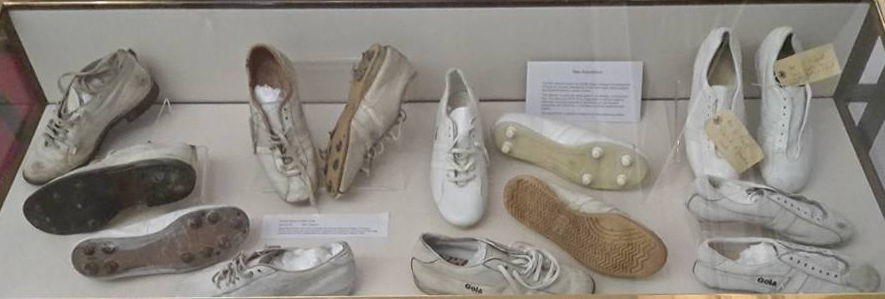
A selection of cricket boots and shoes from the collection of Alan Knott
2: TIMEFRAME: Work backwards from install date, add at least a week leeway!
On a big exhibition there will be text to write and proof read, objects to locate, condition check and clean, conservators, mount makers and museum designers to book and work with, printing and delivery to allow for and loans to arrange. Then that’s all before you get to de-install the old exhibition, install the new one, snag any problems and update location entries!
Gant charts are your friend.
3: OBJECTS. Once a long/short list has been decided collect everything together in a dedicated space.
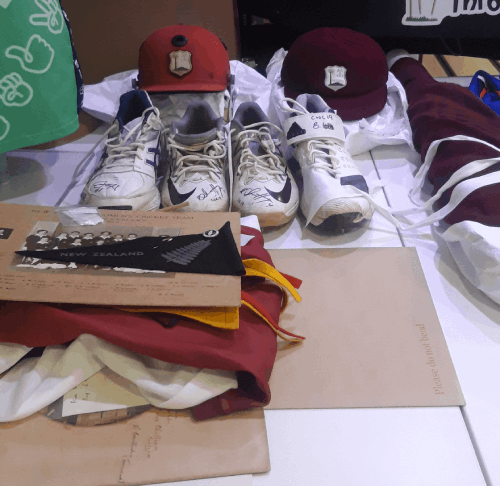
West Indies Cricket Kit awaiting display, including a size 15 shoe
Clean and condition check everything. Arrange for framing. conservation or any bespoke mounts to be made. Find a suitable mount or arrange for any bespoke ones to be made, as you first locate the objects, and keep them with the object until install. Label each object with the number of the case they are to go in ready for install. This saves so much time and effort on install day.
Use thumbscrews on anyone who moves anything out of the holding zone without permission.
4: INSTALL DAY: Clear your diary, put up an out of office email, stock up on tea and biscuits.
Gather your tool kit, spare mounts, step ladder, hazard barrier, case keys, mount fittings, tapes, (masking, double sided, Melinex etc) spare tool kit, first aid kit (DON’T bleed on the objects) and case plans. Pick an easy case to start with, one with few items, or a simple layout. Be prepared to leave out the odd item that doesn’t work/fit. I can’t emphasise how much a good museum designer and well thought out layout drawings mitigate install stress.
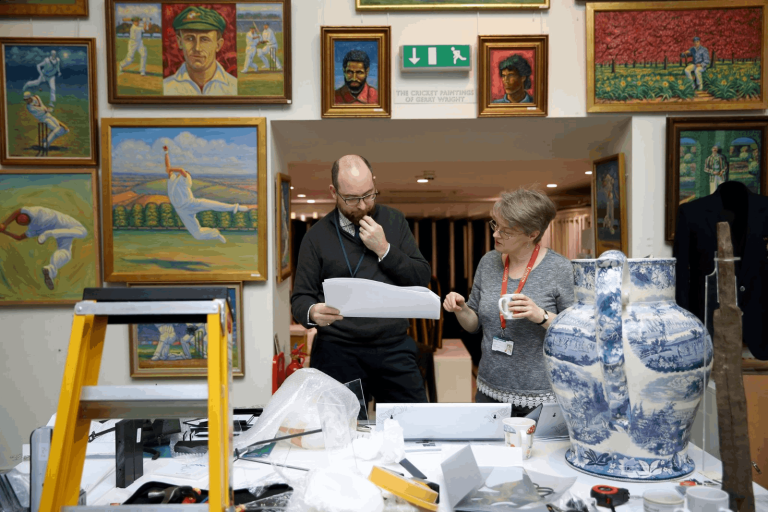
This is ordered chaos – honest. Proving the point that everything in museums is fuelled by tea.
5: LOCATIONS: Update locations !
Do this within a week or two of taking down the old exhibition and putting in the new one.
Put everything away.
AND BREATHE.
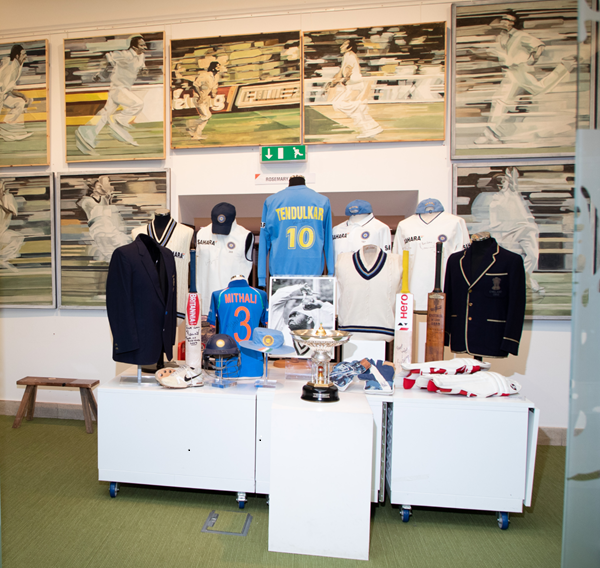
Temporary Major Match display for the 2018 England vs India Test
Set up in the Workroom, usually off limits to the general public. this is typical of the open displays that I researched and installed during major matches at MCC. This type of display, with simple text labels was always invigilated by a member of the collections staff. Partially to discourage touching, but more importantly to be on hand to talk about the objects and the work of the department.