
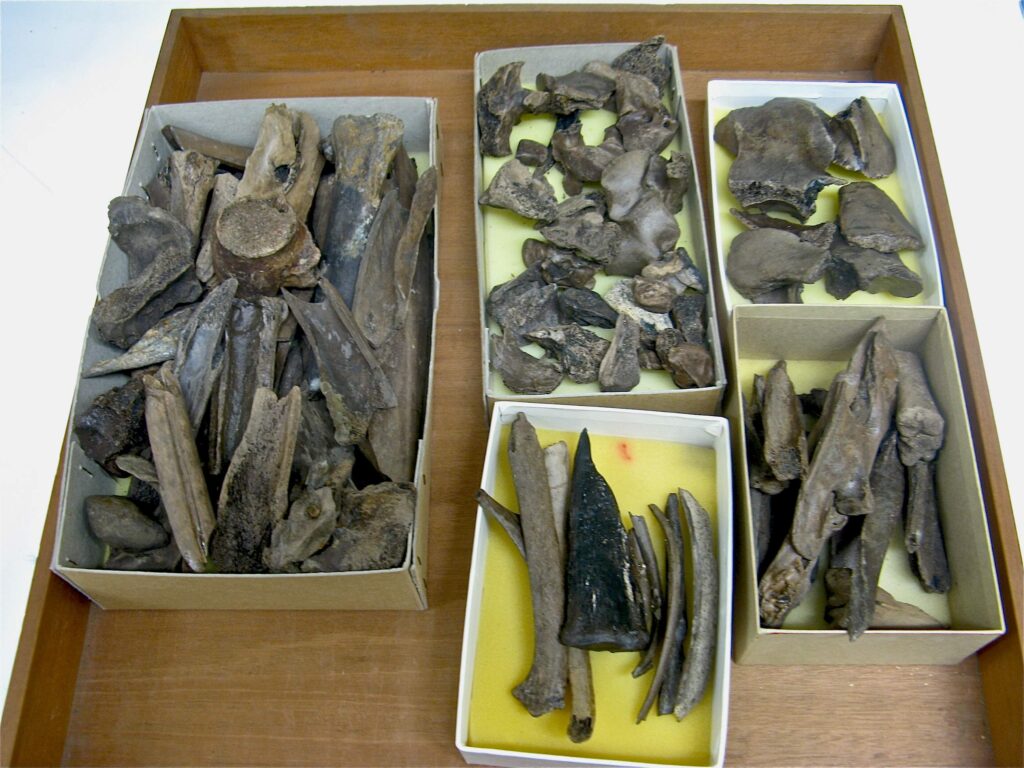
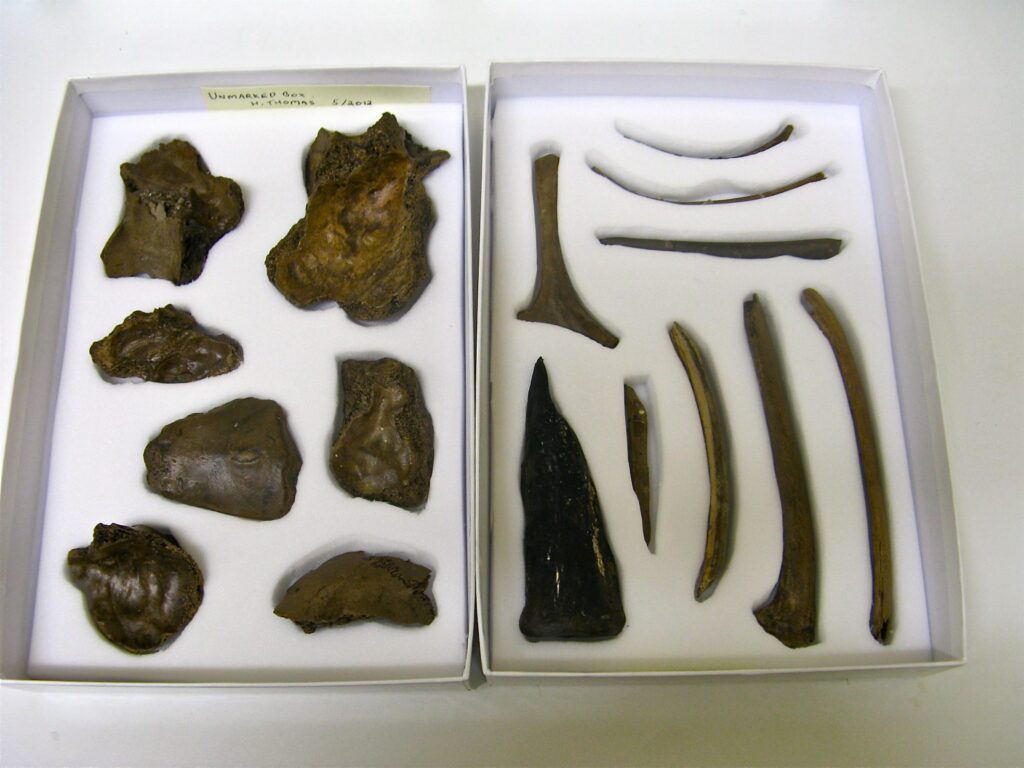

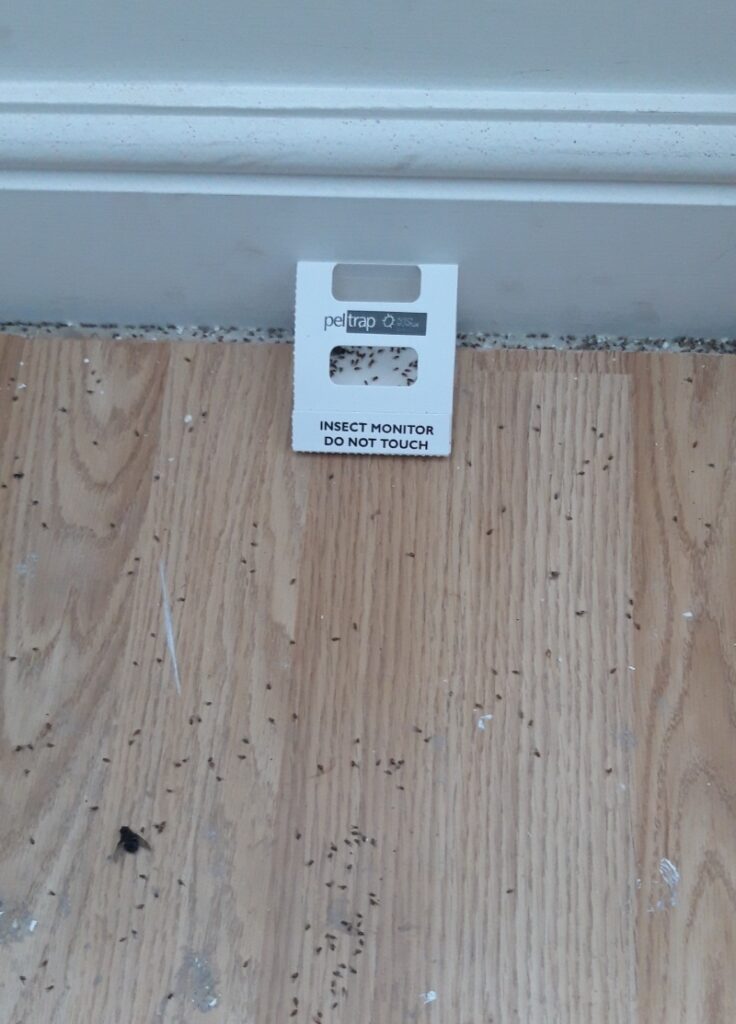
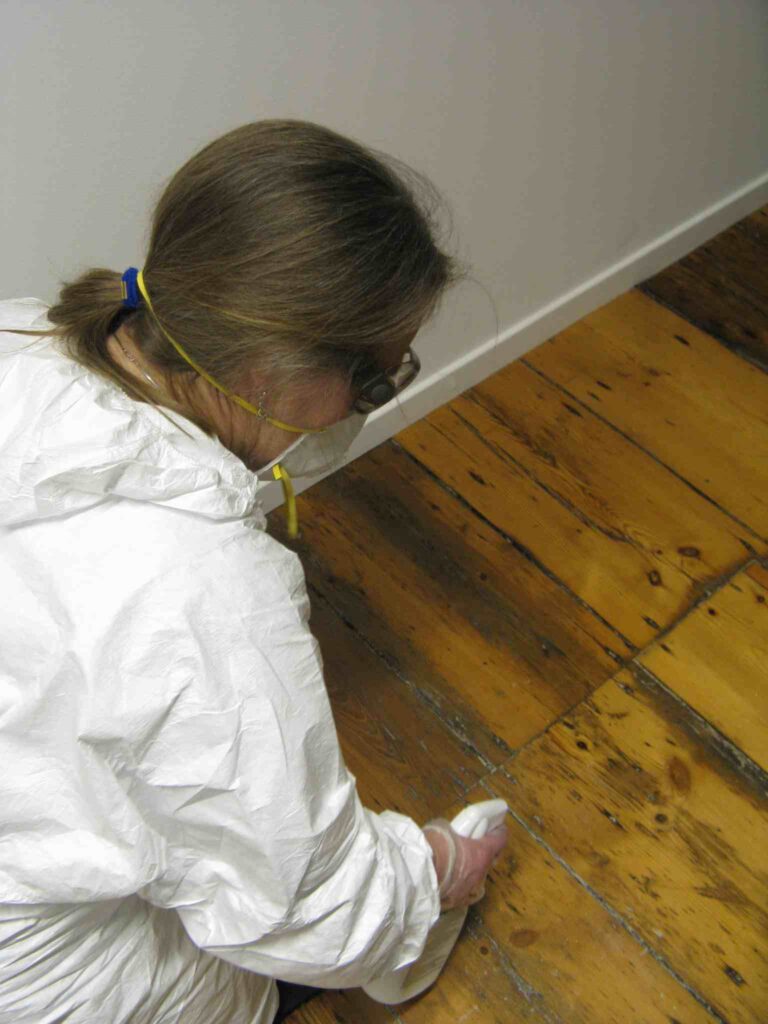
Boxes of unsorted Stone Age animal bones; Bones in bespoke foam storage trays; Prepping a cricket cap for display; Blunder trap with infestation of flies; Spraying with Constrain®; Trialling trap placement for maximum body count.
One of my lecturers once said, “A Conservator is a person who does as little work as possible without getting fired”. Said partly in jest it does demonstrate that a conservator doesn’t ‘fix’ an object and make it like new, they stabilise and preserve it in its current state, so that it continues to tell the tales that made it worth collecting and displaying.
A lifelong interest in craft techniques and working directly with museum objects gave me a deep appreciation for the vulnerabilities inherent in different materials. I found myself increasingly drawn to the strategic, anticipatory side of conservation, where thoughtful planning can prevent the need for interventive treatment altogether. Simple fixes like using acid free packaging can be both quick and cost effective.
My work has involved developing risk registers grounded in the 10 agents of deterioration. By assessing threats systematically I can highlight priorities and support institutions in making informed decisions about resource allocation. I can also plan and write tailored integrated pest management protocols, including trapping strategies, monitoring schedules, and staff guidance to ensure early detection and rapid response to pest activity.
Previous roles have extended into emergency preparedness as well. I have collaborated closely with fire officers and health & safety teams to produce First Out Lists and comprehensive salvage plans. I truly hope you will never need these documents. However, they provide the peace of mind that in the the event of an incident, staff could act quickly, safely, and in a coordinated way to protect the most vulnerable and significant items. They also give external stakeholders reassurance that you value your collection and that preventive conservation is a proactive, institution‑wide responsibility.